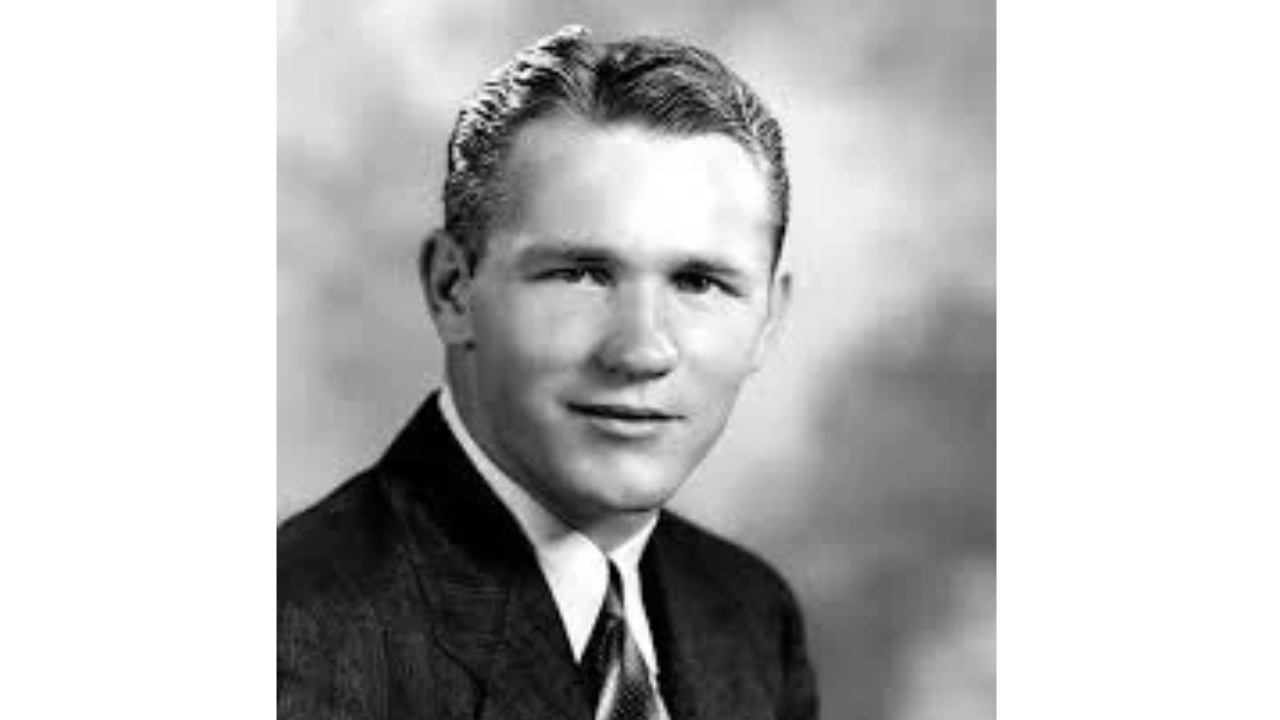
Tony Butkovich was an All-American college football fullback and United States Marine who was killed in action during the Battle of Okinawa on April 18, 1945, aged 24. He became a national football sensation at Purdue University in 1943, leading the country with 833 rushing yards and scoring 16 touchdowns. Selected by the Cleveland Rams in the 1944 NFL Draft, Butkovich never played professional football because of his military service during World War II. His remarkable story gained renewed attention through the 2026 Netflix film The Mosquito Bowl, in which Ray Nicholson portrays him.
Early Life
Anthony James Butkovich was born on April 4, 1921, in St. David, Illinois. Growing up in a small Illinois community, he developed his athletic abilities while attending Lewistown High School.
His performances on the football field established him as a promising young athlete capable of competing at the collegiate level.
Butkovich subsequently enrolled at the University of Illinois, where he began his college football career before transferring to Purdue University in 1943 through a wartime military training program.
Tony Butkovich Profile
| Particulars | Details |
|---|---|
| Full Name | Anthony James Butkovich |
| Nickname | Touchdown Tony |
| Date of Birth | April 4, 1921 |
| Birthplace | St. David, Illinois |
| Nationality | American |
| Profession | College Football Player and Marine |
| Playing Position | Fullback |
| College | Illinois and Purdue |
| NFL Draft | 1944, First Round |
| NFL Team | Cleveland Rams |
| Military Rank | Corporal |
| Date of Death | April 18, 1945 |
| Age at Death | 24 years |
| Place of Death | Okinawa, Japan |
| Portrayed By | Ray Nicholson |
College Football Career
Butkovich transferred to Purdue University through the V-12 Navy College Training Program, an initiative established during World War II to prepare college students for military service.
His arrival strengthened Purdue’s football team during the 1943 season. Playing as a fullback, Butkovich distinguished himself through his powerful rushing ability, physical strength and consistent scoring performances.
His exceptional productivity earned him the nickname “Touchdown Tony.”
Despite leaving the team before the season concluded because of military obligations, he accumulated statistics that placed him among the country’s leading college football players.
Historic 1943 Season
Butkovich’s performances in 1943 remain an important chapter in Purdue football history.
He recorded 833 rushing yards on 142 carries, averaging approximately 5.9 yards per attempt and leading the nation in rushing.
His performances against Big Ten opponents were particularly impressive, producing 629 rushing yards and 13 touchdowns across four conference games.
| Achievement | 1943 Record |
|---|---|
| Rushing Yards | 833 |
| Rushing Attempts | 142 |
| Average Yards per Carry | 5.9 |
| Total Touchdowns | 16 |
| Conference Rushing Yards | 629 |
| Conference Touchdowns | 13 |
| Heisman Trophy Voting | Eighth Place |
| Purdue Team Record | 9–0 |
His contributions helped Purdue complete an undefeated season and secure a share of the Big Ten championship.
Butkovich received first-team All-American and All-Big Ten honors, establishing himself among the outstanding college athletes of his era.
NFL Draft
Tony Butkovich’s collegiate achievements attracted considerable attention from professional football teams.
The Cleveland Rams selected him 11th overall in the first round of the 1944 NFL Draft.
The selection represented an opportunity to pursue a professional sporting career. However, World War II had already interrupted his college football journey.
Butkovich entered active military service instead of joining the Rams. Consequently, despite his impressive college statistics and first-round draft selection, he never appeared in an NFL game.
Military Service
Butkovich served as a corporal in the 29th Marine Regiment, 6th Marine Division of the United States Marine Corps.
His military responsibilities took him to the Pacific theater, where American forces were engaged in operations against Japan.
During his deployment, Butkovich encountered other former college football players whose athletic careers had similarly been interrupted by wartime service.
Their shared sporting backgrounds eventually brought them together for an extraordinary football game that would become part of military and sporting history.
The Mosquito Bowl
On Christmas Eve in December 1944, Marines stationed on Guadalcanal participated in a football game that became known as The Mosquito Bowl.
The event featured servicemen from different Marine regiments, including athletes who had previously competed at prominent American universities.
For the participants, the game provided a temporary return to familiar sporting traditions amid the uncertainty of military life.
Author Buzz Bissinger later documented the event in his 2022 book, The Mosquito Bowl: A Game of Life and Death in World War II, preserving the stories of the athletes who participated.
Cause of Death
Tony Butkovich was killed in action by enemy sniper fire on April 18, 1945, during the Battle of Okinawa.
He had celebrated his 24th birthday just two weeks earlier.
His death ended a promising athletic career before he had the opportunity to compete professionally. Butkovich was subsequently laid to rest in Canton, Illinois.
His former high school in Lewistown commemorates his memory through Butkovich Field, preserving his connection to the community where his football journey began.
Netflix Film
Butkovich’s life reached a new generation of audiences through the 2026 Netflix film The Mosquito Bowl, adapted from Bissinger’s historical book.
Actor Ray Nicholson portrays Tony Butkovich in the production, bringing renewed attention to the football player’s athletic achievements and military service.
The film explores the experiences of college athletes whose lives changed dramatically during World War II, highlighting the connection between football, friendship and wartime sacrifice.
Lasting Legacy
More than eight decades after his death, Tony Butkovich remains a significant figure in Purdue’s sporting history.
His outstanding rushing statistics, All-American honors and first-round NFL Draft selection reflect the extraordinary potential of a career interrupted by war.
Tony Butkovich’s legacy extends beyond football records, representing a generation of young athletes whose professional ambitions were cut short by World War II.