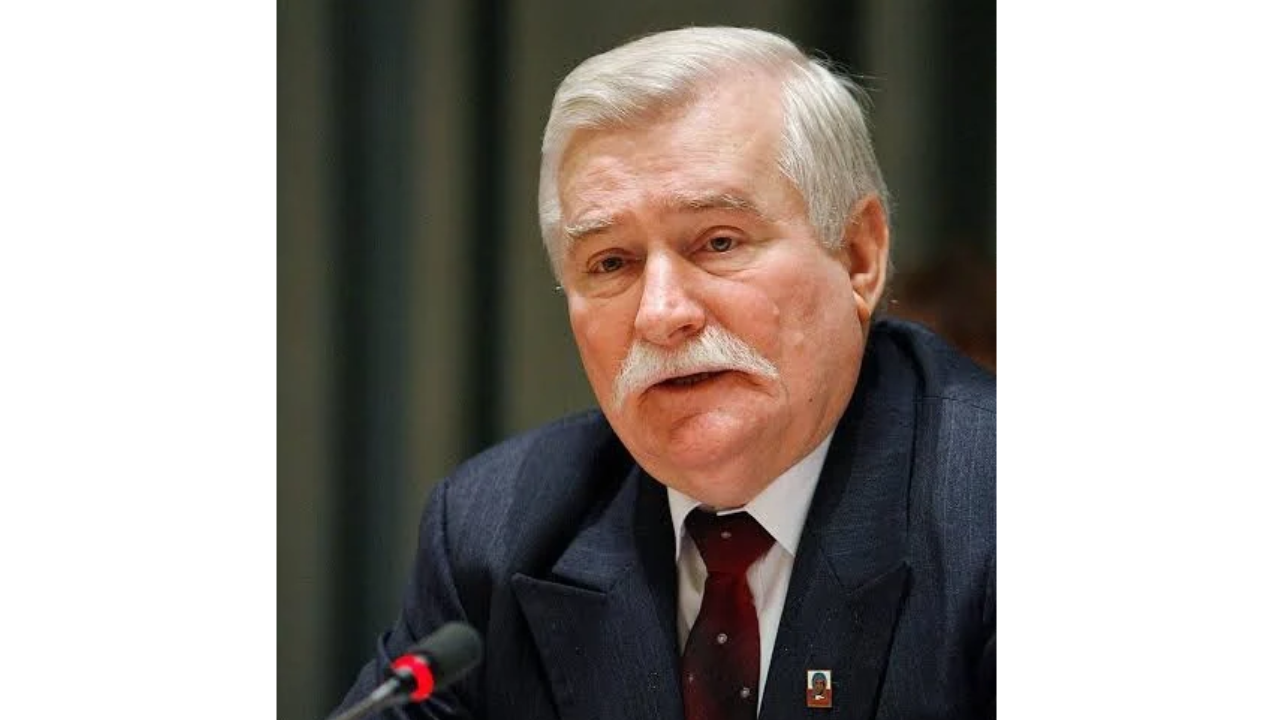
Lech Wałęsa, the 83-year-old former president of Poland and Nobel Peace Prize winner, has returned to international attention following his November 2026 remarks supporting former U.S. President Bill Clinton for the Nobel Peace Prize. Speaking during a United States tour, Wałęsa praised Clinton’s role in NATO’s eastward expansion and its importance to European security. The former electrician, who helped lead Poland’s peaceful struggle against communist rule, remains an influential voice in discussions about democracy, freedom, and international relations.
Who Is Lech Wałęsa?
Lech Wałęsa is a Polish political leader, former trade union activist, and Nobel Peace Prize laureate who served as Poland’s president from 1990 to 1995.
He was born on September 29, 1943, in Popowo, Poland, during World War II.
Wałęsa became internationally recognized as the leader of Solidarity, an independent trade union that challenged Poland’s communist government.
His leadership helped create the conditions for democratic reforms in Poland and influenced political movements throughout Eastern Europe.
He received the 1983 Nobel Peace Prize for his nonviolent struggle to defend workers’ rights and fundamental freedoms.
Early Life
Wałęsa grew up in a working-class Polish family during a period of significant political and economic uncertainty.
After completing his technical education, he trained as an electrician.
In 1967, he began working at the Lenin Shipyard in Gdańsk, one of Poland’s major industrial facilities.
His experiences at the shipyard exposed him to difficult working conditions, limited labor protections, and government restrictions on independent organizations.
These concerns eventually encouraged him to participate in workers’ protests.
Wałęsa became increasingly involved in labor activism during the 1970s, despite the risks associated with challenging communist authorities.
Labor Activism
Lech Wałęsa was dismissed from the Gdańsk shipyard in 1976 after becoming involved in activities opposing government labor policies.
His dismissal did not end his involvement in the workers’ movement.
Instead, he continued supporting independent labor organizing and maintaining contact with activists.
Polish authorities repeatedly questioned and detained him because of his political activities.
At the time, independent trade unions faced severe restrictions under the communist system.
Wałęsa’s willingness to challenge those restrictions helped establish his reputation among workers seeking greater representation.
Solidarity Movement
In August 1980, Wałęsa emerged as the leader of a major strike at the Gdańsk shipyard.
The protests began over workplace grievances but quickly expanded into demands for independent unions, civil liberties, and political reform.
Wałęsa represented striking workers during negotiations with communist government officials.
The talks resulted in the historic Gdańsk Agreement on August 31, 1980.
The agreement allowed the creation of Solidarity, Poland’s first independent trade union under communist rule.
Solidarity rapidly expanded, attracting approximately 10 million members.
The movement became a powerful symbol of organized, largely peaceful resistance to communist authority.
Martial Law
The Polish communist government viewed Solidarity’s growing influence as a threat.
On December 13, 1981, authorities imposed martial law, restricting civil liberties and suppressing opposition activities.
Wałęsa was detained and remained interned for approximately eleven months.
Solidarity was subsequently outlawed, and many activists faced imprisonment or government surveillance.
Despite these restrictions, underground networks continued organizing resistance.
Wałęsa remained an internationally recognized symbol of the struggle for political freedom.
His detention also increased global attention on human rights conditions in Poland.
Nobel Peace Prize
Lech Wałęsa received the Nobel Peace Prize in 1983 for his commitment to nonviolent resistance and workers’ rights.
The award recognized his contribution to advancing fundamental freedoms despite political repression.
Wałęsa did not travel to Oslo to accept the prize because he feared Polish authorities might prevent him from returning home.
Instead, his wife, Danuta Wałęsa, accepted the award on his behalf.
The recognition strengthened his international reputation and drew further attention to Poland’s democratic opposition.
It also demonstrated the growing importance of peaceful civic movements in challenging authoritarian governments.
Poland’s President
Following the political changes of 1989, Poland began moving away from communist rule.
Wałęsa participated in the broader democratic transition that followed negotiations between the government and opposition leaders.
In December 1990, he became Poland’s first president elected through a nationwide popular vote.
His presidency lasted until 1995.
During his administration, Poland experienced major economic and political reforms.
The country moved toward a market-based economy while rebuilding democratic institutions.
Wałęsa also supported closer relations with Western countries and helped oversee the withdrawal of Soviet troops from Polish territory.
However, his presidency faced political disagreements and economic challenges.
In 1995, he lost his re-election campaign to Aleksander Kwaśniewski.
Life After Presidency
After leaving office, Wałęsa continued participating in public discussions about democracy and international politics.
He established the Lech Wałęsa Institute, which promotes democratic values, civic participation, and international cooperation.
He has attended conferences, delivered speeches, and met political leaders across different countries.
Although his political views have sometimes generated controversy, his role in Poland’s democratic transition remains historically significant.
His international activities have continued well beyond his presidency.
November 2026 Remarks
On November 23, 2026, Wałęsa attracted attention after arguing that former U.S. President Bill Clinton deserved a Nobel Peace Prize.
During a speaking engagement at American University, he praised Clinton’s support for NATO enlargement during the 1990s.
Wałęsa argued that expanding NATO membership helped protect countries that had previously been part of the Soviet sphere of influence.
Poland, Hungary, and the Czech Republic joined NATO in 1999 during Clinton’s presidency.
For Wałęsa, the enlargement represented an important step toward securing the independence of Central and Eastern European nations.
His remarks came during a reported 27-date speaking tour across the United States.
Wife and Family
Lech Wałęsa married Danuta Gołoś in 1969, years before becoming an internationally recognized political leader.
The couple has eight children.
Danuta played an important role in supporting the family during periods of political pressure, detention, and public attention.
Her appearance at the 1983 Nobel Peace Prize ceremony remains one of the most recognizable moments in the family’s history.
Despite decades in public life, Wałęsa has frequently acknowledged the sacrifices associated with political activism.
Latest Update
As of November 2026, Lech Wałęsa is 83 years old and continues participating in international discussions about democracy and European security.
His recent remarks concerning Bill Clinton demonstrate his continuing interest in NATO, international cooperation, and the political future of Europe.
More than four decades after helping establish Solidarity, Wałęsa remains closely associated with Poland’s transition from communist rule to democracy.
His legacy extends beyond his presidency, encompassing labor rights, peaceful political resistance, and the democratic transformation of Eastern Europe.
From an electrician at the Gdańsk shipyard to a Nobel Peace Prize winner and national president, Lech Wałęsa’s career remains one of the defining political stories of modern Polish history.