
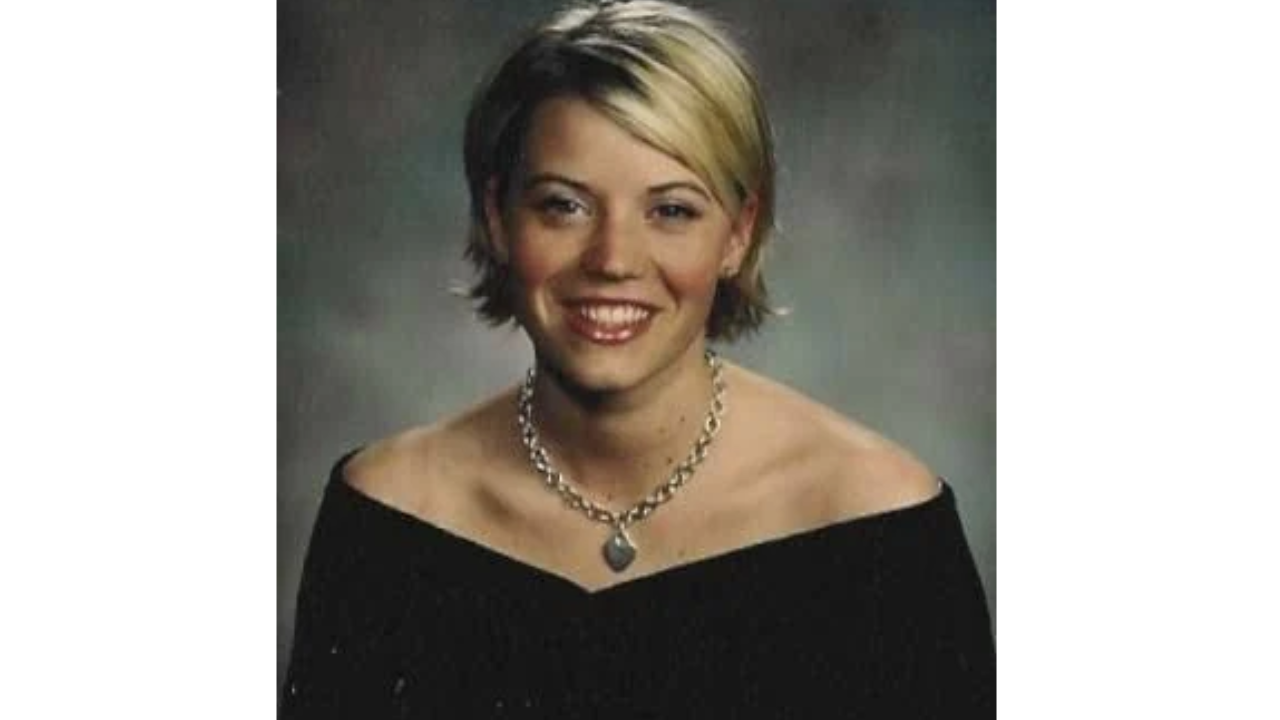
Dru Sjodin was a 22-year-old University of North Dakota student who disappeared on November 22, 2003, after leaving Columbia Mall in Grand Forks, North Dakota. Her disappearance triggered an extensive search that lasted nearly five months before her body was discovered in Minnesota on April 17, 2004. Investigators eventually identified convicted sex offender Alfonso Rodriguez Jr. as her killer. The case attracted national attention and contributed to major changes in how the United States tracks registered sex offenders.
Who Was Dru Sjodin?
Dru Katrina Sjodin was an American college student attending the University of North Dakota when she disappeared in November 2003.
She was 22 years old and worked at Victoria’s Secret inside Columbia Mall in Grand Forks.
Sjodin was balancing her education with part-time employment while preparing for her future.
Her disappearance shocked the local community because she vanished during an ordinary Saturday afternoon after finishing work.
The circumstances quickly raised concerns about her safety, prompting an investigation involving local authorities, federal agencies, and volunteers.
When Did Dru Go Missing?
Dru Sjodin disappeared on Saturday, November 22, 2003, after completing her shift at Victoria’s Secret around 4 p.m.
She reportedly visited Marshall Field’s before heading toward her vehicle in the Columbia Mall parking lot around 5 p.m.
While walking outside, Sjodin was speaking with her boyfriend on her cellphone.
During their conversation, she suddenly appeared distracted and said a few brief words before the call disconnected.
Her boyfriend became concerned when he could not reach her afterward.
When Sjodin failed to return as expected, her disappearance was reported to authorities.
What initially appeared to be a missing-person investigation soon developed into a suspected abduction case.
Evidence at the Mall
Investigators examined the Columbia Mall parking lot, where Sjodin had last been seen.
Police discovered her vehicle unlocked, raising questions about what happened before she could leave the shopping center.
A black knife sheath was also recovered near the rear tire of her car.
Authorities considered the object potentially important evidence while reconstructing her final movements.
Investigators reviewed available surveillance footage, interviewed witnesses, and examined information about people who had visited the mall that afternoon.
The evidence increasingly suggested that Sjodin had been forcibly taken from the parking area.
Who Was Arrested?
Alfonso Rodriguez Jr. was arrested on December 1, 2003, approximately nine days after Sjodin disappeared.
Rodriguez was a registered sex offender with a history of serious sexual offenses.
He had been released from prison earlier in 2003 after serving approximately 23 years for crimes including sexual assault and attempted kidnapping.
Investigators connected Rodriguez to the disappearance through evidence gathered during the investigation.
Surveillance information placed him at Columbia Mall, while forensic testing identified evidence linking Sjodin to his vehicle.
His arrest represented a major development, but Sjodin’s location remained unknown.
Five-Month Search
The search for Dru Sjodin became one of the most widely followed missing-person investigations in the region.
Law enforcement officers, volunteers, and community members participated in efforts to locate her.
Search teams examined rural areas, waterways, fields, and locations across North Dakota and Minnesota.
Winter conditions made the operation especially difficult.
Snow-covered terrain and freezing temperatures limited visibility and complicated ground searches.
Despite Rodriguez’s arrest, investigators continued searching for evidence that could establish what had happened to Sjodin.
Her family and supporters remained hopeful that the investigation would provide answers.
Body Discovered
On April 17, 2004, searchers discovered Dru Sjodin’s body in a ravine near Crookston, Minnesota, approximately 25 miles east of Grand Forks.
The discovery came almost five months after her disappearance.
Melting snow helped make the area more accessible to search teams.
The recovery confirmed that the missing-person investigation had become a homicide case.
For Sjodin’s family, the discovery brought devastating confirmation after months of uncertainty.
Authorities continued examining forensic evidence to establish the circumstances surrounding her death.
Murder Trial
Rodriguez faced federal prosecution because the case involved kidnapping across state lines.
In 2006, a federal jury convicted Alfonso Rodriguez Jr. of kidnapping resulting in death.
Prosecutors presented evidence connecting him to Sjodin’s abduction and killing.
The trial attracted significant public attention because of Rodriguez’s previous criminal history and his release from prison shortly before the crime.
He initially received a federal death sentence.
However, subsequent legal proceedings resulted in that sentence being overturned.
In 2023, Rodriguez was resentenced to life imprisonment without the possibility of parole.
The revised sentence meant he would remain incarcerated rather than face execution.
What Is Dru’s Law?
Dru Sjodin’s murder contributed to a national discussion about public access to sex offender information.
In 2006, President George W. Bush signed the Adam Walsh Child Protection and Safety Act, which strengthened federal sex offender registration and notification systems.
The legislation included provisions associated with Dru’s Law.
One of the most significant developments was the creation of the Dru Sjodin National Sex Offender Public Website.
The website allows people to search participating sex offender registries through a single federal platform.
It provides access to information maintained by states, territories, and participating tribal jurisdictions.
The official website is NSOPW.gov, operated by the U.S. Department of Justice.
Why the Case Matters
The disappearance and murder of Dru Sjodin exposed serious concerns about monitoring individuals convicted of violent sexual offenses.
Rodriguez’s criminal history and release before the attack became central issues in public discussions about offender registration.
The case demonstrated the importance of cooperation between law enforcement agencies across state boundaries.
It also showed how a single investigation could influence national legislation.
Although offender registration systems cannot guarantee public safety, Dru’s Law expanded public access to information intended to support awareness and prevention.
Latest Case Update
As of November 2026, Dru Sjodin’s disappearance is a solved murder case, not an active missing-person investigation.
Alfonso Rodriguez Jr. was convicted of kidnapping resulting in death and received a life sentence without parole following later court proceedings.
More than two decades after Sjodin disappeared, her name remains associated with the federal sex offender public website.
Her case continues to be remembered for the extensive search, the tragedy experienced by her family, and the legal reforms that followed.
Dru Sjodin was only 22 when her life was taken, but her case helped shape a nationwide system for accessing registered sex offender information.