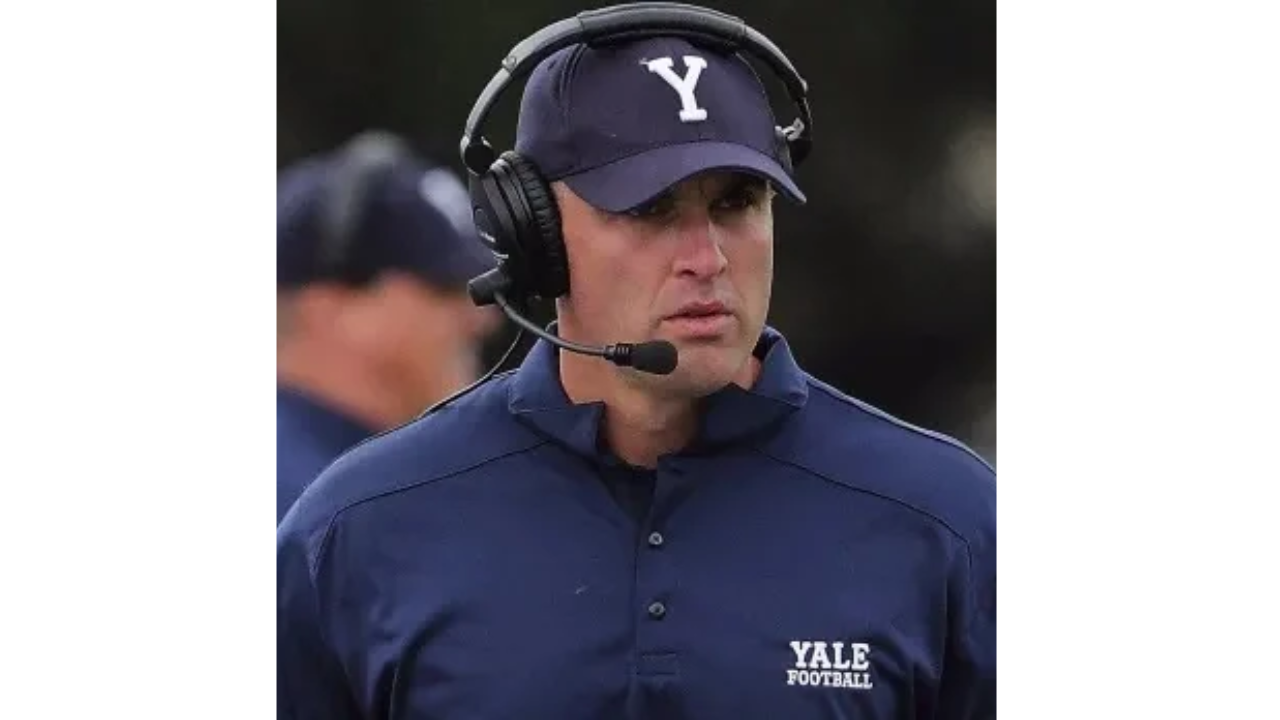
Tony Reno, the former head coach of Yale University’s football team, died from Creutzfeldt-Jakob disease (CJD), a rare and fatal neurological disorder. He passed away on October 2, 2026, at his home in Sturbridge, Massachusetts, at the age of 52. Reno had stepped down from his coaching position in February 2026 following his diagnosis, bringing an end to a remarkable career dedicated to college football and student-athlete development.
Tony Reno’s Cause of Death
Tony Reno’s cause of death was Creutzfeldt-Jakob disease, a progressive brain disorder that causes severe neurological deterioration.
According to the tribute published by Yale University on October 4, 2026, the former football coach died approximately eight months after stepping away from his professional responsibilities.
The disease affects brain function and currently has no known cure.
Reno’s passing marked a significant loss for the Yale football community, where he had established himself as a respected coach, mentor and leader.
What Is CJD?
Creutzfeldt-Jakob disease is a rare neurological condition belonging to a group of disorders known as prion diseases.
It develops when abnormal proteins called prions cause damage to brain tissue, resulting in progressive deterioration of neurological functions.
Common symptoms can include memory loss, difficulty walking, impaired coordination, personality changes and involuntary muscle movements.
CJD affects approximately one to two people per million worldwide each year.
Unlike many other neurological disorders, it can progress rapidly, with most patients dying within a year of symptom onset.
Treatment generally focuses on managing symptoms and providing supportive care. The specific symptoms Reno experienced have not been disclosed in the supplied reports.
Who Was Tony Reno?
Anthony Reno was an American college football coach born on February Reno’s date of birth was February 9, 1974, in Oxford, Massachusetts.
He developed a passion for football early in life and pursued opportunities within the sport through education, playing experience and coaching.
Reno attended Worcester State College, where he played football as a defensive back.
His experiences as a student-athlete provided the foundation for his subsequent coaching career.
Over the following decades, he became known for his defensive expertise, recruitment strategies and commitment to developing young athletes.
Coaching Beginnings
Before becoming Yale’s head football coach, Reno gained experience through several assistant coaching positions.
He worked at Worcester State and subsequently joined the coaching staff at Yale, where he developed familiarity with the university’s football programme.
Reno also spent time at Harvard University as an assistant coach, gaining further experience within the highly competitive Ivy League.
His responsibilities included defensive coaching and special teams development.
These positions helped prepare him for the leadership opportunity that would define his professional career.
Yale Football Career
Tony Reno became Yale’s head football coach in January 2012.
He took responsibility for rebuilding a programme with a distinguished history in American college football.
Under his leadership, the Bulldogs gradually developed into a competitive Ivy League team.
Reno emphasized disciplined preparation, teamwork, recruitment and personal accountability.
His coaching philosophy extended beyond winning games, placing importance on academic achievement and the personal development of student-athletes.
His lengthy tenure made him a significant figure in the modern history of Yale football.
Ivy League Success
One of Reno’s greatest professional achievements was restoring Yale’s competitiveness within the Ivy League.
In 2017, he guided the Bulldogs to their first outright Ivy League football championship since 1980.
The achievement represented a major milestone for the university’s football programme.
Yale subsequently secured additional Ivy League championships in 2019, 2022 and 2023 under his leadership.
These accomplishments reflected the programme’s sustained improvement and Reno’s ability to develop competitive teams across multiple seasons.
His success also strengthened Yale’s position within one of America’s oldest collegiate football conferences.
Why He Stepped Down
Tony Reno stepped down from his position as Yale’s head football coach in February 2026, following his diagnosis with Creutzfeldt-Jakob disease.
The decision ended approximately 14 years of leadership at the university.
His departure allowed him to focus on his health and spend time away from the demanding responsibilities associated with college football coaching.
Given the progressive nature of CJD, the diagnosis represented a serious medical challenge.
His passing in October occurred roughly eight months after his departure from the programme.
Personal Life
Away from football, Reno was a husband and father who maintained strong connections to Massachusetts.
He was married to his wife, Toni Reno, and the couple had three children.
Despite the demanding schedule associated with college athletics, family remained an important part of his life.
His son Dante Reno also pursued a football career as a quarterback, continuing the family’s connection to the sport.
Reno spent his final days at his home in Sturbridge, Massachusetts.
Yale’s Tribute
On October 4, 2026, Yale University published a tribute recognizing Reno’s life, coaching achievements and contribution to the institution.
The university remembered him not only for his success on the football field but also for his leadership and influence on student-athletes.
His years at Yale helped shape the experiences of numerous players who developed academically, personally and professionally under his guidance.
Tony Reno’s Legacy
Tony Reno’s legacy extends beyond championship victories and competitive football records.
His dedication to rebuilding Yale’s football programme, mentoring young athletes and maintaining high standards established him as an influential figure in collegiate sports.
Although Creutzfeldt-Jakob disease claimed his life at just 52, his contribution to Yale football remains an important part of the university’s sporting history.
His career will be remembered for championship achievements, sustained leadership and his commitment to the next generation of football players.