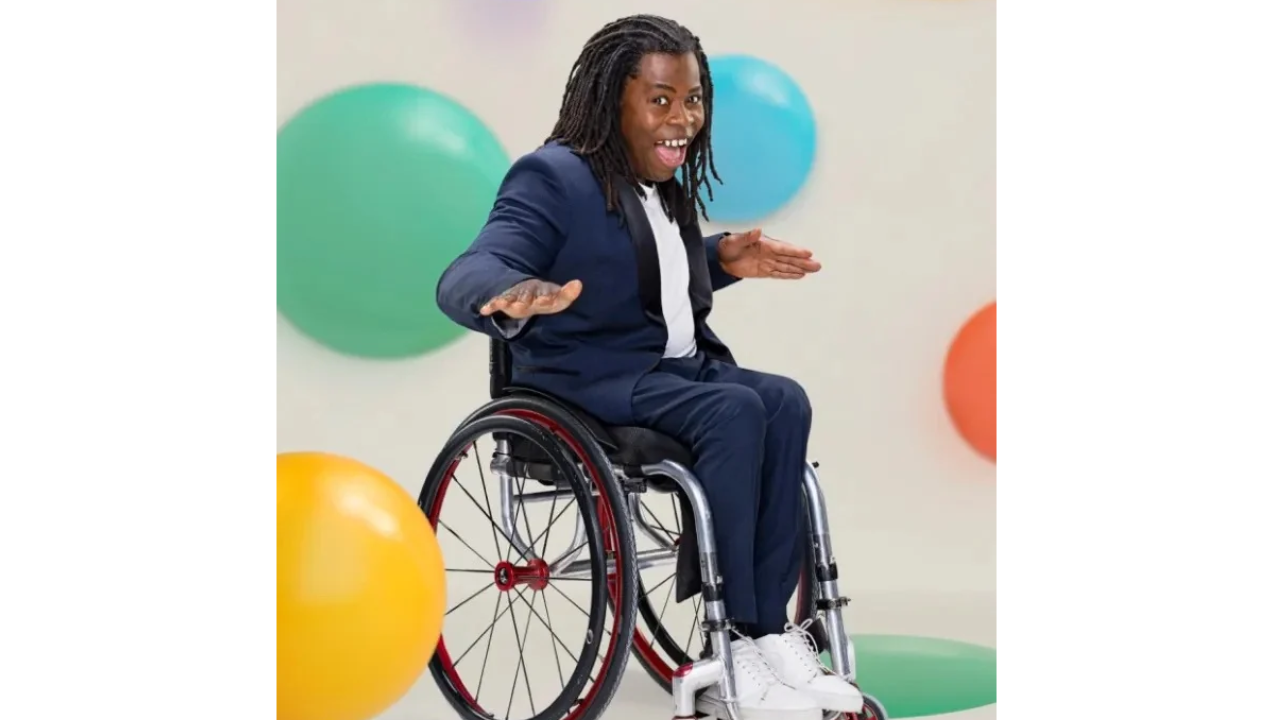
Ade Adepitan uses a wheelchair after contracting polio at just 15 months old in Lagos, Nigeria. The infection caused complete paralysis in his left leg and restricted movement in his right leg. Despite facing mobility challenges from early childhood, Adepitan became a Paralympic bronze medallist, television presenter and disability rights campaigner. In November 2026, he attracted renewed public attention after appearing on I’m a Celebrity… Get Me Out of Here!
What Is Ade Adepitan’s Disability?
Ade Adepitan has a physical disability resulting from poliomyelitis, commonly known as polio. The infectious disease can attack the nervous system and cause permanent muscle weakness or paralysis.
Adepitan contracted the virus during infancy, leaving him with significant mobility limitations. His condition affects his lower limbs, making walking without mobility assistance difficult.
His left leg is completely paralysed, while his right leg retains limited movement. He primarily uses a wheelchair to maintain his independence and occasionally uses crutches for certain activities.
Childhood Polio Diagnosis
Born on March 27, 1973, in Lagos, Nigeria, Ade experienced a life-changing illness before reaching his second birthday.
He had reportedly received two doses of the polio vaccine but contracted the disease before completing his vaccination course.
The infection caused lasting damage to his nervous system, affecting the muscles responsible for movement in his legs.
At the time, polio remained a significant public health concern in several parts of the world, particularly in communities with limited access to comprehensive vaccination programmes.
The consequences of the infection became a permanent part of his life.
Moving to Britain
Ade Adepitan moved to the United Kingdom at the age of three. His family settled in East London, where he received medical support and continued his education.
During his childhood, he learned to walk with the assistance of heavy metal leg braces, commonly called callipers.
These devices provided additional support to his legs but made everyday movement physically demanding.
Growing up with a disability also presented social challenges. Adepitan encountered misconceptions about his abilities, particularly when participating in activities alongside other children.
His growing interest in sports eventually introduced him to opportunities that would shape his professional future.
Why He Uses a Wheelchair
Adepitan’s wheelchair provides practical support for everyday movement, travel and professional commitments.
Although he retains some movement in his right leg, the permanent effects of polio prevent him from walking independently with ease.
Using a wheelchair allows him to navigate accessible environments more efficiently without placing unnecessary physical strain on his body.
For Adepitan, a wheelchair is a means of independence rather than a limitation.
His public appearances have also helped challenge the misconception that wheelchair users cannot participate in demanding physical activities or pursue successful careers.
Paralympic Success
Adepitan developed a passion for wheelchair basketball during his younger years. The sport gave him an opportunity to compete, improve his physical skills and establish friendships with other athletes.
Through years of training, he progressed to international competition and represented Great Britain.
One of his greatest sporting achievements came at the 2004 Athens Paralympic Games, where he won a bronze medal as part of Britain’s wheelchair basketball team.
He also helped Great Britain secure a gold medal at the 2005 Paralympic World Cup in Manchester.
His sporting accomplishments established him as a prominent figure in British disability sports and introduced his achievements to a wider audience.
Television Career
Following his success in competitive basketball, Adepitan built a career in broadcasting.
He became a familiar face on British television through sports coverage, travel documentaries and factual entertainment programmes.
His work has included presenting Paralympic coverage, contributing to BBC programmes and exploring environmental and humanitarian issues through documentaries.
Rather than limiting his television career to disability-related subjects, Adepitan has covered diverse topics, including climate change, international travel and global cultures.
His broadcasting career demonstrates the importance of providing disabled presenters with opportunities across different areas of television.
I’m a Celebrity Appearance
In November 2026, Adepitan reportedly made television history by becoming the first wheelchair-using contestant on I’m a Celebrity… Get Me Out of Here!
His participation brought renewed attention to accessibility within reality television, particularly in programmes involving challenging outdoor environments.
During his appearance, he discussed his childhood experiences and the circumstances surrounding his disability.
His conversations helped viewers understand how contracting polio affected his early development and subsequent life.
The programme also highlighted the importance of adapting entertainment formats to accommodate contestants with different physical requirements.
Disability Advocacy
Beyond television and professional sports, Adepitan has consistently supported greater accessibility and inclusion for disabled people.
He has worked with organisations promoting disability sports and encouraging young people with physical disabilities to participate in recreational activities.
His advocacy focuses on removing unnecessary barriers in education, employment, transportation and public spaces.
In 2005, Adepitan was appointed a Member of the Order of the British Empire (MBE) for his services to disability sport.
Through his public platform, he continues to encourage meaningful representation and equal opportunities for people with disabilities.
Life Beyond Disability
Ade Adepitan’s disability remains a permanent consequence of childhood polio, but it represents only one aspect of his identity.
His achievements in international sports, broadcasting and disability advocacy have earned him recognition throughout Britain and beyond.
From learning to move with metal leg braces during childhood to competing at the Paralympics and appearing on mainstream television, Adepitan has established a career across several industries.
His experiences continue to draw attention to the importance of polio prevention, accessible environments and equal participation in society.