
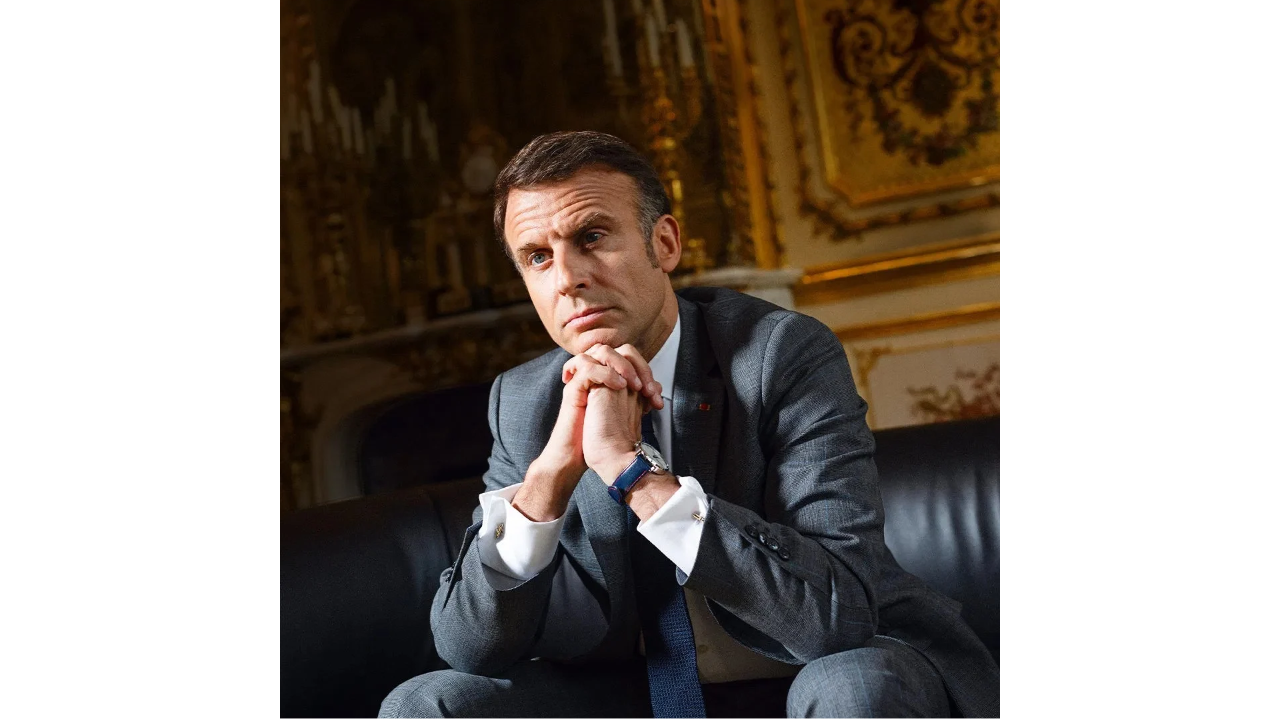
Emmanuel Macron is the President of France, a position he has held since May 14, 2017. Born on December 21, 1977, in Amiens, France, he became the youngest president in French history when elected at 39. Now serving his second presidential term, Macron remains an influential European leader whose policies on economic reform, international security, and European cooperation continue to attract worldwide attention.
Who Is Emmanuel Macron?
Emmanuel Jean-Michel Frédéric Macron is a French politician and former investment banker who rose to national prominence through his work in government.
He won the 2017 French presidential election against Marine Le Pen and secured reelection in 2022.
Macron is associated with centrist politics, supporting economic competitiveness, European integration, and institutional reform.
As French president, he also serves as ex-officio Co-Prince of Andorra, a constitutional role shared with the Bishop of Urgell.
His leadership has combined ambitious policy proposals with periods of significant political opposition.
Age
Emmanuel Macron is 48 years old as of November 22, 2026. He will celebrate his 49th birthday on December 21, 2026.
His relatively young age attracted international attention during his first presidential campaign.
When he entered the Élysée Palace in 2017, he represented a generational change in French politics, having never previously held elected office.
Nearly a decade later, Macron has become one of Europe’s longest-serving current national leaders.
Early Life
Macron was born in Amiens, northern France, to Jean-Michel Macron, a physician and professor of neurology, and Françoise Noguès, a medical doctor.
He grew up in an academically oriented household and demonstrated an early interest in literature, philosophy, and public affairs.
During his teenage years, he attended school in Amiens before continuing his education in Paris.
His intellectual interests later influenced his political speeches and approach to public policy.
Unlike many established French politicians, Macron initially developed his professional career outside electoral politics.
Education
Macron studied philosophy at Paris Nanterre University before attending Sciences Po, one of France’s leading institutions for political studies.
He subsequently entered the prestigious École nationale d’administration (ENA), graduating in 2004.
ENA traditionally prepared senior civil servants for influential positions within the French government.
Following graduation, Macron joined the French Finance Inspectorate, gaining experience in public administration and economic policy.
This educational background helped establish the foundations of his later government career.
Banking Career
Before becoming a prominent politician, Macron worked in investment banking.
He joined Rothschild & Co in 2008, where he participated in major financial transactions.
His work in the private sector strengthened his understanding of corporate finance, international business, and economic decision-making.
Supporters later highlighted this experience as evidence of his economic expertise.
Critics, however, argued that his banking background contributed to policies perceived as favoring wealthy individuals and large businesses.
Political Rise
Macron’s national political career accelerated during the presidency of François Hollande.
Between 2012 and 2014, he served as Deputy Secretary-General of the Élysée Palace.
In August 2014, he became Minister of the Economy, Industry and Digital Affairs, a position he held until 2016.
During this period, he promoted measures intended to encourage business activity and modernize sections of the French economy.
In 2016, Macron founded En Marche!, a political movement positioned outside France’s traditional left-right party divisions.
The movement later evolved into Renaissance, establishing the organizational foundation for his presidential campaigns.
Presidency
Macron won the presidency in May 2017, defeating Marine Le Pen in the second round.
His election marked a major shift in French politics, challenging the dominance of established political parties.
During his first term, his government pursued labor market reforms, changes to taxation, and policies intended to improve economic competitiveness.
He also emphasized investment in technology, environmental initiatives, and European cooperation.
In April 2022, Macron defeated Le Pen again, becoming the first French president in two decades to win reelection.
His second term has faced a more fragmented parliament and increasingly difficult negotiations over domestic legislation.
Major Challenges
Macron’s presidency has experienced several periods of public unrest.
The Yellow Vests protests, beginning in 2018, reflected widespread dissatisfaction over living costs, taxation, and economic inequality.
His government’s 2023 pension reform, which raised the minimum legal retirement age from 62 to 64, also triggered nationwide demonstrations and strikes.
Political tensions intensified after the 2024 parliamentary elections, which produced a divided National Assembly without a clear governing majority.
These developments complicated the passage of legislation and increased pressure on successive governments.
Supporters argue that Macron’s reforms address long-term economic challenges, while opponents question their social consequences and implementation.
Foreign Policy
European security and strategic autonomy remain central themes of Macron’s international agenda.
He has consistently advocated stronger European defense capabilities and closer cooperation among European Union members.
Following Russia’s full-scale invasion of Ukraine in 2022, Macron became deeply involved in diplomatic discussions concerning European security and assistance to Kyiv.
In November 2026, he continued warning about Russian aggression and security threats affecting European countries.
His foreign policy also emphasizes France’s relationships with Asian partners, including cooperation in the Indo-Pacific region.
Macron has sought to maintain France’s international influence through diplomacy, defense partnerships, and economic engagement.
Wife and Family
Emmanuel Macron has been married to Brigitte Macron since October 20, 2007.
Brigitte, born Brigitte Trogneux, previously worked as a teacher and met Macron during his school years in Amiens.
Their relationship has attracted considerable media attention because of their approximately 24-year age difference.
Brigitte has three children from her previous marriage, making Macron a stepfather.
The couple have no biological children together.
As France’s first lady, Brigitte participates in public engagements and supports initiatives involving education, disability inclusion, and children’s welfare.
Books
Macron published Révolution in 2016, presenting his political ideas before the 2017 presidential election.
The book addressed economic modernization, political renewal, and France’s position within Europe.
It also helped communicate his ambition to move beyond conventional party politics.
His speeches and policy proposals have subsequently expanded on many of these themes.
Latest Updates
As of November 2026, Macron remains focused on European security, France’s international partnerships, and domestic political stability.
His second presidential term is scheduled to conclude in May 2027.
Under the French Constitution, a president cannot serve more than two consecutive terms, meaning Macron cannot immediately seek a third consecutive mandate in 2027.
With the next presidential election approaching, attention is increasingly shifting toward his political legacy and the future direction of France.
At 48, Emmanuel Macron remains a major figure in European politics, with his presidency defined by economic reform, international diplomacy, and continuing debates over France’s political and social future.